






Advancing the Science and Technology of Materials, Interfaces, and Processing
The Chapter promotes communication, dissemination of knowledge, recommended practices, research, and education in the fields of science and technology of interest to the AVS to develop new materials, process technology, devices, and related understanding of material properties.
The objectives of the Chapter shall be:
- to provide a continuing forum accessible to its members as well as other persons active or interested in the fields of science and technology of interest to the AVS for the purpose of fostering an improved understanding of technology;
- to promote the dissemination of that understanding by the organization of meetings and symposia;
- to provide opportunities for collaboration among technical professionals within the Chapter’s boundaries that will enhance the technical and industrial vitality of the area; and
- to contribute actively to the success of the AVS via the roles and responsibilities established in the AVS constitution and by-laws.
Officers
Chair
Steven Consiglio
E-mail: steve_consiglio @ avs.org
Past-Chair
Aleksandra Biedron
E-mail: aleksandra_biedron @ avs.org
Treasurer
Carl Ventrice
E-mail: carl_ventrice @ avs.org
Secretary
n/a
Members-at- Large
Suman Bhaumik
E-mail: suman_bhaumik @ avs.org
Marco Hopstaken
E-mail: marco_hopstaken @ avs.org
Peter Kerns
E-mail: peter_kerns @ avs.org
Tao Li
E-mail: tao_li @ avs.org
J. Scott Price
E-mail: Jscott_Price @ avs.org
Ganpati Ramanath
E-mail: ganpati_ramanath @ avs.org
Harsimran Singh
E-mail: harsimran_singh @ avs.org
Vincent Smentkowski
E-mail: vin_smentkowski @ avs.org
Oral Presentations
- October 14, 2013 Fall Meeting Announcement - Abstracts
- April 24, 2013 Spring Meeting Announcement - Abstracts
Eray Adil
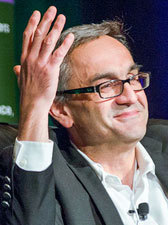 Eray Aydil is the Alstadt Lord Mark Professor of Chemical and Biomolecular Engineering at New York University (NYU) Tandon School of Engineering, Chairman of the Department of Chemical and Biomolecular Engineering, and the AVS Editor-in-Chief. As the AVS Editor-in-Chief, he helps direct the AVS journal portfolio and is the Editor-in-Chief of the Journal of Vacuum Science and Technology A & B. His research revolves around thin film deposition and materials synthesis for energy conversion and sustainable manufacturing. He specifically focuses on reducing the cost and increasing the efficiencies of solar cells.
Eray received his B.S. degrees in chemical engineering and materials science, both from U. C. Berkeley in 1986 and his Ph.D. degree in chemical engineering in 1991 from the University of Houston. He was a postdoc at Bell Labs until 1993, when he joined the chemical engineering department faculty at U.C. Santa Barbara (UCSB) as an assistant professor. At UCSB, he rose up the ranks to become a full professor and vice chairman of the department. He left UCSB in 2005 and joined the Department of Chemical Engineering and Materials Science (CEMS) at the University of Minnesota (UMN), where he remained until 2018; between 2009 and 2014, he served as the Executive Officer of CEMS. At CEMS, he was the Christenson Chair in Renewable Energy. In 2018 he moved to NYU, and in 2021 he was appointed the Chairman of the Department of Chemical and Biomolecular Engineering Department.
Eray has published over 200 articles and holds seven patents. In recognition of his research, he has received the Peter Mark Award and the Plasma Prize from the AVS, the Norman Hackerman Young Author Award of the Electrochemical Society, the National Young Investigator Award of the NSF, and the Camille-Dreyfus Teacher-Scholar Award. He is a Fellow of the American Vacuum Society (AVS) and a Fellow of the UMN Institute on the Environment. He has received numerous teaching awards, including the Professor of the year award several times at UCSB and most recently the Horace T. Morse-UMN Alumni Association Award for Outstanding Contributions to Graduate and Professional Education in 2017.
Eray started his AVS journey as a student in 1990 at an AVS-sponsored meeting in Texas. His Ph.D. advisor, Demetre Economou, encouraged him to attend and give a presentation. Two years later, Eray attended his first Symposium in Chicago. Again, his postdoc advisor at AT&T Bell Labs, Richard Gottscho, encouraged him to present at that Symposium. Eray feels that AVS has historically always welcomed students, which he appreciates to this day, “I think students feel more comfortable and less nervous at AVS meetings. I have not seen anyone get up and unnecessarily challenge a student presenter in a way that made the student uncomfortable at an AVS Symposium.” Although his student years have passed, Eray still finds the Society welcoming, inclusive, and friendly. He cites this as one of his favorite things about AVS.
Besides the people, Eray also values the science of the Society. He finds it interdisciplinary, dynamic and filled with professionals from a variety of sectors. He points towards an example of this at the Annual Symposium. “Industrial involvement brings interesting and important problems to those of us who are in academia. The industrial interactions I have at AVS symposia introduce a sense of pragmatism into my research. AVS draws from the industry as no other Society does.” He also truly appreciates that “AVS is an interdisciplinary and dynamic Society. The topics covered in the symposia change depending on the interest of the members.” Along with making his contributions, Eray enjoys the opportunity to learn from the many and varied professionals who contribute to the AVS membership. He finds his AVS Editor-in-Chief role very rewarding: besides being exposed to all the research topics that AVS members conduct, Eray likes to engage the early-career scientists and authors in the Society and the AVS journals.
Just for fun, we asked Eray some questions to get to know him better. Eray is a triathlete, marathon runner, and amateur Chef. We also learned that Eray’s family is extremely important to him. He had a lot to say about them. His 21-year old son, majoring in political science and French at Hunter College, “knows everything there is to know about Broadway and Disney.” Eray enjoys going to theater and musicals with him, as well as watching hockey. The Aydils like to spend time at their place in York, located on the Southern Maine coast. Eray’s family also feels passionate about advocating for people with disabilities, particularly young people and students.
Alain Diebold
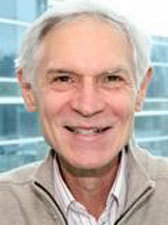 Alain Diebold is Professor Emeritus and Empire Innovation Professor of Nanoscale Science at SUNY Polytechnic Institute. Alain remains a resident of the Capital Region where he and wife Annalisa reside. Alain and Annalisa have two grown children Laura and Gregory who were born in Austin, TX. The family enjoys traveling especially to Europe where they visit family and friends. Naturally, the whole family enjoys Texas style BBQ. Laura married Austin Clark this summer (2021) in a joyful and safe ceremony, and they live in Baltimore. Greg received his master’s degree in Urban Planning from Hunter College in December 2020, and he now works for Cayuga County and lives in Syracuse. Alain remains in contact with the friends he developed in graduate school and beyond.
Professor Diebold was a long time Interim Dean of the College of Nanoscale Science, and he was an advisor to the Interim President of SUNY Polytechnic Institute. He is an AVS Fellow and a SPIE Fellow. He maintains an active research group in the area of the optical and electrical properties of nanoscale materials and their characterization in in-fab metrology. Significant publications include a Fall 2021 book from Springer Nature entitled the Optical and Electrical Properties of Nanoscale Materials (co-author) and the Handbook of Silicon Semiconductor Metrology (editor and chapter author). Through collaboration with the industrial partners at the College of Nanoscale Science and Engineering such TEL Technology Center America, students and post-doctoral fellows have advanced the characterization and metrology of advanced materials and structures through microscopy, optical, and both laboratory and synchrotron-based X-Ray methods. He authored or co-authored 18 book chapters, nearly 100 peer reviewed journal papers, more than 135 conference proceedings, and given more than 105 invited presentations both domestically and internationally. He remains active in the internal spectroscopic ellipsometry community which provides intellectual inspiration, and more importantly, is the community having many life-long friends.
For many years, he cochaired the Metrology Roadmap Technical Working Group for the International Technology Roadmap for Semiconductors which he started. This group wrote the semiconductor industry’s roadmap for Metrology and Characterization for more than fifteen years. The ITRS was championed by the Semiconductor Industry Associations from the U.S., Japan, Korea, Taiwan, and Europe. During this time, he was the Metrology Editor for the semiconductor industry magazine Future Fab International. He has written more than 30 magazine articles about characterization and metrology for Future Fab and other magazines.
He was a SEMATECH Senior Fellow and worked in advancing the characterization and metrology of semiconductors where he worked from 1989 to 2007. Prior to that, he was a Senior Chemist at Allied Signal in Morristown, NJ from 1981 to 1988. Dr. Diebold started and led the SEMATECH Analytical Lab Managers Working Group which coordinated research, development, and application of new materials characterization capability in aberration corrected microscopy and associated sample preparation, X-Ray Diffraction and Reflectivity, electron spectroscopy, scanned probe microscopy, and synchrotron-based methods. This group championed the introduction of whole wafer capable materials characterization systems for at-line or in-line use by the semiconductor industry using a location addressable precision wafer stage. This breakthrough enabled the characterization of defects and sample areas by both in-line defect and particle detection systems and in-line dual column FIB (focused ion beam-SEM) and at-line/in-line methods such as XPS, SIMS, Auger, etc. This group also championed the use of X-Ray Reflectivity as a means of measuring the thickness of thin metal films. Other examples of collaborative research to advance measurement methods included AFM, SIMS, and Atom Probe. This group consisted of the Directors of Characterization Labs in the SEMATECH member companies, members for the national Institute of Science and Technology, the US National Laboratories, key university researchers across the US and internationally.
Professor Diebold has a long-time association with the AVS. After Gary Rubloff and Mike Liehr started the AVS Manufacturing Science and Technology Group, he became chair and helped lead that group for many years. This group organized the MSTG technical sessions. He has been a member of other AVS Group organizing committees including the one on Spectroscopic Ellipsometry. He also helped Dave Seiler of NIST start the Conference Series now known as the Frontiers of Characterization and Metrology for Nanoelectronics back in 1998. The next FCMN will be held in 2022. The FCMN is co-sponsored by the AVS which provides meeting organizational support. His roughly 15-year term as Associate Editor of the IEEE Transaction on Semiconductor Manufacturing ends in December 2021.
Vincent (Vin, Vince) Smentkowski
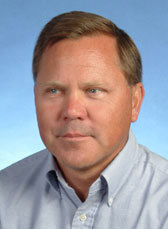 Vincent Smentkowski is a Surface Chemist/Analyst and have been working in the characterization organization at the General Electric Global Research Center (GE-GRC) in Niskayuna, NY since 1997. For the past 9 years, my emphasis has been on ToF-SIMS analysis. In 2010 I spent a significant amount of time using ToF-SIMS to analyze solar materials. ToF-SIMS has also proven to be a very valuable technique for MEMS, sensing, polymeric, biomedical, x-ray detector, battery, and alloy samples. I routinely find unexpected species/contaminants in the samples I analyze by ToF-SIMS. An important aspect of my work involves the use of multivariate statistical analysis (MVSA) tools in order to perform a rapid, unbiased, and complete analysis of the full ToF-SIMS data sets. MVSA algorithms allow for the identification of species association in complex multiphase materials. In addition to ToF-SIMS, I am also constructing a high temperature desorption apparatus. I am also working with external laboratories in order to evaluate advanced microstructural characterization techniques such as Atom Probe Tomography and Helium Ion Microscopy and show the benefits these techniques have for GE materials. When I first arrived at GE, I performed AES, XPS, SEM, and EBSD analysis while making the case to purchase our first ToF-SIMS instrument. At GE, I have also designed novel instrumentation/protocol to support various GE businesses. Since I work in an industrial characterization laboratory, I can not say much about the GE materials, however I am able to talk about, publish, and present novel data analysis protocol. I have co-authored 77 external papers, 75 internal GE reports and I hold 6 US patents. I have also presented numerous contributed and invited talks. In 2010 I was named a fellow of AVS for "For exceptional contributions in the field of industrial surface analysis, including multivariate statistical analysis of ToF-SIMS data".
Before arriving at GE, I held a post-doc position at Argonne National Laboratories where I was part of a team that designed and built ion scattering instrumentation in order to perform in-situ, real-time, surface analysis of thin films during deposition at mTorr pressures; a project which resulted in a 1997 R&D100 Award. I obtained my Ph.D. in physical chemistry under the guidance of Prof. John T. Yates, Jr., the title of my thesis was "Surface Science Investigation of Tribologically Important Systems - Iron and Diamond".
I have been a member of AVS since graduate school. During my early career, I associated myself mostly with the Surface Science Division and the Vacuum Science Divisions, however as my work started to become more applied, I rapidly became more involved in the Applied Surface Science Division (ASSD). The diversity of topics covered by AVS enables transitions between divisions. I know many people that are associated with multiple divisions.
An important aspect of ASSD is that the community works as a team to help each other. People working as an analyst in an industrial setting do not have many (if any) colleagues which know as much about an analytical technique as they do. For new hires, especially for those starting right out of school, this is a drastic change since in an academic setting they have many colleagues they can talk to about a technique including their research advisor. Being involved in ASSD increases the number of people who understand techniques - and you can "bounce" ideas off of them. The AVS annual symposium and exhibition is a key part of my professional development. The meeting gives me an opportunity to have candid discussions with others working in various fields of science and technology. Many of my successful scientific collaborations (including the collaboration I have in place with Sandia National Laboratories in order to perform MVSA of ToF-SIMS data sets) originated from discussions at past AVS International Symposia.
I am the 2011 chair of the ASSD and I am a co-chair of the upcoming Surface Analysis 2011 meeting which will take place in Albany NY April 11-13, 2011. I also served as the founding chair of the Hudson Mohawk Chapter of AVS (2009-2010). I have also been a co-chair of the past 3 bi-annual surface symposia at the annual Microscopy and Microanalysis meetings (2006, 2008, and 2010).
Many AVS researchers mentored me during my professional development, I encourage everyone (especially students and post-docs that are entering the workplace) to seek a senior AVS member which can serve as your mentor. I look forward to serving as the ASSD chair in 2011 and continuing to mentor the next generation of AVS'ers.
Outside of work, I enjoy custom woodworking, spending time outdoors, and vacationing with my family. I have two daughters ages 6 and 10 - both are figure skaters hence my wife and I spend 4 or more nights a week at local ice skating rinks. Over the past few years, I have been learning the science behind figure skate sharpening and last year I purchased equipment to sharpen figure skates and was trained in the use of the equipment. I now sharpen a few pair of skates/week. In 2011, I will be chairing the Albany Figure Skating Club's USFS Competition.
Sincerely,
Vincent Smentkowski
Surface Analyst/Chemist
Chemical Technologies & Materials Characterization
T +1 518 387 5467
smentkow@ge.com
www.edisonsdesk.com
Spring: Ariful Islam (Rensselaer Polytechnic Institute) - Best Graduate Oral Presentation
Epitaxial Growth of the Topological Semimetal NbAsSpring: Carlos E. Nogales-Herrera (Rensselaer Polytechnic Institute) - Best Graduate Poster Presentation
Platform for Plasma Spectrochemical Analysis of Levitated Particles Through Laser-based SpectroscopiesSpring: Jonathan O. Graham (Rensselaer Polytechnic Institute) - Best Undergraduate Poster Presentation
Breaking Down Forever Chemicals: Plasma Driven Modification of PFAS
- Fall: Enzo Novoselic (University at Albany) - Best graduate Oral Presentation
Catalytic Oxygen Dissociation for Area-Selective HfO₂ Deposition on Cobalt Through Selective PMMA Etching
- Fall: Moira Niluxsshun (University at Albany) - Best Graduate Poster Presentation
Shelf-Life and Crystallinity of Negative-Tone Organotin Resists
- Fall: Jarron Maguire (University at Albany, TEL Intern) - Best Undergraduate Poster Presentation
Electrical Characterization of Ferroelectric Hf0.5Zr0.5O2 Films
- Spring: Zahra Ahmadian (Rensselaer Polytechnic Institute) – Best Graduate Oral Presentation
Epitaxial Growth of CuAI2 Films as Conductor for High Conductivity Interconnects
- Spring: Dwiti Krushna Das (University at Albany) – Best Graduate Poster Presentation
Multiplexed Biosensing Using Grating-Coupled Fluorescence Plasmonics (GC-FB) for Near-Point-Of-Care Diagnostics
- Spring: Ethan Han (Rensselaer Polytechnic Institute) - Best Undergraduate Poster Presentation
Effect of Deposition Method on Electron Transport in Mo/W Thin Films for Interconnect Applications
- Fall: Alvar Garza (University at Albany) - Best Undergraduate Poster Presentation
Measurement of the Dynamic Response of MEMS Cantilevers
- Fall: Maryam Ahmadi (University of Connecticut) - Best Graduate Poster Presentation
Enhancing Plasmonic Photodetectors: A Study on the Fabrication and Optical Behavior of Nanoantennas
- Fall: Ivo V. Otto IV (University at Albany) - Best graduate Oral Presentation (shared)
Investigation of Low Temperature Fluorine-based Etching of TaN with Selectivity to SiOCH Dielectric
- Fall: Anthony Valenti (University at Albany) - Best graduate Oral Presentation (shared)
Degradation of Organosilicon-Functionalized Surfaces During X-ray Photoelectron Spectroscopy: An In-depth Study
- Spring: Finley Donachie (Rensselaer Polytechnic Institute) – Best Undergraduate Poster Presentation
Harnessing Thermal Laser Epitaxy for Rapid Synthesis of Topological Insulators
- Spring: Ismile Khan Shuvo (University at Albany) – Best Graduate Poster Presentation
Template-Directed Crystallization of AlSb/Sb(A7) PCM for Low Energy Switching
- Spring: Anshuman Thakral (Rensselaer Polytechnic Institute) - Best Graduate Oral Presentation
Metastable Face-Centered Cubic Cobalt for High Conductivity Interconnects
- Fall: Alex Kaloyeros (SUNY Polytechnic Institute) – Best Graduate Oral Presentation (shared)
Toward Scalable Telecom Single Photon Emitters for Quantum Photonics
- Fall: Saloni Pendse (Rensselaer Polytechnic Institute) – Best Graduate Oral Presentation (shared)
Van der Waals epitaxy of Vanadium dioxide
- Fall: Jennifer M. O’Brien (Clarkson University) - Best Undergraduate Poster Presentation
Dynamic Covalent Crystallization of Covalent Organic Frameworks Between Planar Substrates
- Fall: Tushar Mahajan, (SUNY Polytechnic Institute) - Best Graduate Poster Presentation
Design and Development of Quantum Dot Scintillator with Monolithically Integrated Photodetector for Radiation Detection
- Fall: Rubab Ume, CNSE, SUNY Polytechnic Institute - Best Graduate Oral Presentation
Phase Change Memory With Multilevel Resistance States Based On Group III-Sb Binary Alloys
- Fall: Ross Pareis, CNSE, SUNY Polytechnic Institute - Best Graduate Poster Presentation
Constant Electric Field Study Of Time Dependent Dielectric Breakdown In A Low-K Interlevel Dielectric
- Fall: Eric Haarer, University at Albany-SUNY/SUNY Polytechnic Institute - Best Undergraduate Poster Presentation
Near Infrared Single Photon Emission Microscopy
- Spring: Benjamin Harrington, Alex Kaloyeros, and Spyros Gallis - Best Undergraduate Oral Presentation
Polarization-Dependent Visible Photoluminescence from Silicon Carbide Nanophotonic Structures
- Spring: Minh N. Tran, Iver J. Cleveland, Gregory A. Pustorino, and Eray S. Aydil – Best Graduate Oral Presentation
Efficient Near-Infrared Emission from Lead-Free Ytterbium-Doped Cesium Bismuth Halide Perovskite Thin Films
- Spring: Xiaolong Liu, Yi Xue Chong, Rahul Sharma, J. C. Séamus Davis – Best Postdoc Oral Presentation
Atomic-Scale Visualization of Electron-Pair Fluids and Crystals
- Fall: Marie Millares, Philip Schneider, Iulian Gherasoiu and Harry Efstathiadis – SUNY Poly Albany and Utica, NY – Best Undergraduate Oral Presentation
Carbon Films for Electronic Applications
- Fall: Chengwu Zhang, Jie Qi, Tuo Gao and Brian Willis – University of Connecticut, Storrs, CT –Best graduate talk
Photon-Enhanced Area-Selective Atomic Layer Deposition of Plasmonic Nanostructures
- Fall: Charlotte Teunisse, Sarah Dalakos, Donovan Weiblen, Grace Gionta, Deniz Rende and Rahmi Ozisik – Rensselaer, Troy, NY – Best Undergraduate Poster
Magnetically Induced Self-Healing of Polymers
- Fall: Donovan Weiblen, Grace Gionta, Deniz Rende, Pinar Akcora and Rahmi Ozisik – Rensselaer, Troy, NY and Stevens Institute of Technology, Hoboken, NJ – Best Graduate Poster
Impact of Surface Functionality on Magnet Properties of Fe3O4-Polyethylene Oxide Nanocomposites
- Spring: Nicholas Stucchi, Joshua Roys, and Dr. Ryan Brown – Clarkson University
Tuning Spontaneous Growth at the Solid-Liquid Interface
- Spring: Matthew Zotta, Sharadh Jois, Prathamesh Dhakras, Miguel Rodriguez, Ji Ung Lee – SUNY Polytechnic Institute <
Direct Measurement of the Electron Beam Spatial Intensity Profile via Carbon Nanotube Tomography
- Fall: Matthew Strohmayer – CNSE, SUNY Polytechnic Institute – Oral Presentation Award
Development of Focused Electrohydrodynamic Printing Technology - Fall: Peijiao Fang – Department of Materials Science & Engineering, Rensselaer Polytechnic Institute – Graduate Student Poster Presentation Award
Epitaxial Growth of WC1-x(001) Thin Films - Fall: Benjamin Harrington – CNSE, SUNY Polytechnic Institute – Undergraduate Student Poster Presentation Award
Modeling of Erbium Emission in Novel Silicon Carbide Photonic Crystal Nanostructures - Spring: Baiwei Wang – RPI – Best Graduate Student Poster 1st Place
Growth and Properties of Epitaxial Ti1−xMgxN(001) Layers - Spring: Mounika Kotha – CNSE, SUNY Polytechnic Institute - Best Graduate Student Poster 2nd Place
Effect of Oxidation on the Raman and Photoluminescence Properties of Unpassivated and Novel-Passivated Layered GaTe - Spring: Siddarth Laveti – CNSE, SUNY Polytechnic Institute - Best Undergraduate Student Poster
Optimization of the Growth of Graphene on Cu Foil Substrates by Chemical Vapor Deposition
- Fall: Karsten Beckmann – CNSE, SUNY Polytechnic Institute – Oral Presentation Award
Towards Synaptic Behavior of Nanoscale ReRAM Devices for Neuromorphic Computing Applications - Fall: Maseeh Mukhtar – CNSE, SUNY Polytechnic Institute - Graduate Student Poster Presentation Award
Simulations of Backscattered Electrons to Measure Sensitivity Versus Electron Dosage of Buried Semiconductor Features - Fall: Elizabeth Blackert – Department of Materials Science and Engineering, University of North Texas - Undergraduate Student Poster Presentation Award
Highly Porous Scaffolds on TNZT Alloy for Bone Implant Applications - Spring: Zahiruddin Alamgir – CNSE, SUNY Polytechnic Institute – Best Student Talk
Pulse Width Modulation To Achieve Multi-Level Resistance With TaO2 Based Rram Using Hf as Oxygen Exchange Layer - Spring: Casey Biederman – CNSE, SUNY Polytechnic Institute - Best Undergraduate Poster
Optimization of Annealing Parameters for Silicon Carbide (SiC) Nanowire Fabrication - Spring: Mark Altwerger – CNSE, SUNY Polytechnic Institute - Best Graduate Student Poster
Near Infrared Reflectors as Smart-Glass for Solar Panels and Buildings
- Spring: Teresa A. Esposito – RPI – Poster 1st Place
Electron Transport and Inelastic Electron Tunneling Spectroscopy of 1,8-Octanedithiol in a Molecular Junction - Spring: Tyler R. Mowll – CNSE, SUNY Polytechnic Institute - Poster 2nd Place
Growth of Graphene on Cu Single Crystal Substrates - Applied Surface Analysis Symposium (Surface Analysis 2016): Thomas Cardinal - RPI - Talk
Enhanced Electrical Transport at Metallized Bismuth Telluride Interfaces via Organosilane Monolayer Functionalization - Applied Surface Analysis Symposium (Surface Analysis 2016): Jesse Claypoole-CNSE-Poster
Surface and Depth Profile Characterization of Cuin1-Xgaxse2 Thin Film Absorber Layer for Photovoltaic Applications - Fall: Natasha Tabassum – CNSE – Talk
Realization of Self-Aligned Erbium-Doped Silicon-Carbide Nanowires towards Quantum Technologies
- Fall: M. Jeremy Amdur – RPI – undergraduate Talk
Applications of Thin Film Molecular Assemblies As Electrochromic Devices - Fall: Louis Ayensu-Mensah – RPI – Poster
Investigation of Energy Transfer in Perylene Diimide Based Multilayer Light Harvesting Arrays
- Fall: Qianqian Liu, State University of New York, Binghamton, -Talk
An STM Investigation of the Reaction of Hydrogen with Chemisorbed Oxygen on Cu(110) - Fall: Yun-Bo Yang, Rensselaer Polytechnic Institute, - Poster
One Step Growth Method for Ultrathin Single Crystal SnS2 Flakes and their Physical Properties - Fall: Breena M. Sperry, CNSE - Polytechnic Institute of Technology, - Poster
Nanostructured Catalyst of Polymer Electrolyte Fuel Cell - Spring: Mark T. Durniak, Rensselaer Polytechnic Institute, – Talk
Cubic GaInN on Si(001) for Longer Wavelength LEDs
- Spring: Brian T. McGowan, SUNY Polytechnic Institute, – Poster
Negative Magnetoresistance and Electrically Detected Zero Field Splitting in a Low-K Dielectric
- Spring: P.Y. Zheng, Rensselaer Polytechnic Institute – Talk
Ni Doping on Cu Surfaces: Reduced Copper Resistivity
- Spring: Eng Wen Ong, SUNY College of Nanoscale Science & Engineering – Poster
Influence of Chemisorbed Oxygen on the Growth of Graphene on Cu(100) by Chemical Vapor Deposition
- Fall: Robin Jacobs-Gedrim, SUNY College of Nanoscale Science & Engineering – Talk
Low Pressure Chemical Vapor Deposition Synthesis of Chalcogenide Nanostructures
- Fall: J. K. Dash, Rensselaer Polytechnic Institute – Poster
Metal Enhanced Ge1-xSnx Alloy Film Growth on Glass Substrates using a Biaxial CaF2 Buffer Layer
- Spring: Swatilekha Saha, RPI - Talk Transport through Zn Porphyrin for Application in Nanoelectronic Devices
- Spring: Manasa Medikonda, SUNY Albany - Poster X-Ray Characterization of Ge1-xSnx Alloys and the Effect of Sn Concentration on the Band Gap
- Fall: Ruopeng Deng (Graduate Student), Rensselaer Polytechnic Institute - Talk Novel Al1-xScxN Alloy: a Study on Structure and Bandgap
- Fall: Grant Boruchowitz (Undergraduate Student), Rensselaer Polytechnic Institute - Talk Temperature Dependent Resistivity of Copper Thin Films
- Fall: Luis Estevez (Graduate Student), Cornell University - Poster A Facile Approach for the Synthesis of Monolithic Hierarchical Porous Carbons
- Fall: Benjamin Grisafe (Undergraduate Student), College of Nanoscale Science & Engineering - Poster
Measurement of the Enhanced Transfer Curves of Graphene FET Devices
- Spring: Parul Tyagi, SUNY, Albany - Talk Characterization of Few Layer Graphene Films Grown on Cu, Cu--‐Ni and SiC Substrates
- Spring: Alexandra Krawicz, RPI - Poster Porphyrin--‐Based Molecular Multilayer Thin--‐Film Assembled On Gold Electrodes For Electro--‐Optical Applications
- Fall: Florence Nelson, SUNY, Albany - Talk Spectroscopic Ellipsometry and Abberation-Corrected STEM for the Optical and Structural Characterization of Graphene
- Fall: Akitomo Matsubayashi, SUNY, Albany - Poster Oxide Growth on CVD Graphene for Efficient Spin Injection
- Fall: Rutvik J. Mehta, RPI - Talk Microwave-Solvothermal Synthesis for Rapid and Scalable Production of Tunably Doped Nanocrystals and their Assemblies
- Fall: Indira Seshadri, RPI - Poster Nanoferrofluid-Based Thermal Valves for Gating Heat Transport
- Spring: Gorun Butail, RPI - Talk Voltage Controlled Branching of Titania Nanotubes and Its Application for Photovoltaics
- Spring: C. Gaire, RPI - Poster Quasi-Single Crystal Germanium Films on Biaxially Textured CaF2/Glass Substrates
- Fall: P. Palmoaki, RPI - Talk Making Molecular Multilayers Using “Click” Chemistry: Growth and Thin Film Characterization
- Fall: Ben Backes, CNSE - Poster Modeling the Impact of Copper Plasticity on Thermomechanical Stress Induced By Through-Silicon VIAS (TSVS)
- Summer: Eric Bersch, CNSE - Talk X-Ray Photoemission Spectroscopy and Spectroscopic Ellipsometry Characterization of HfO2 and Hafnium Silicate Films on SiO2/Si
- Fall: Saurabh Garg, RPI - Talk Toughening Copper-Silica Interfaces Using Molecular Nanolayers